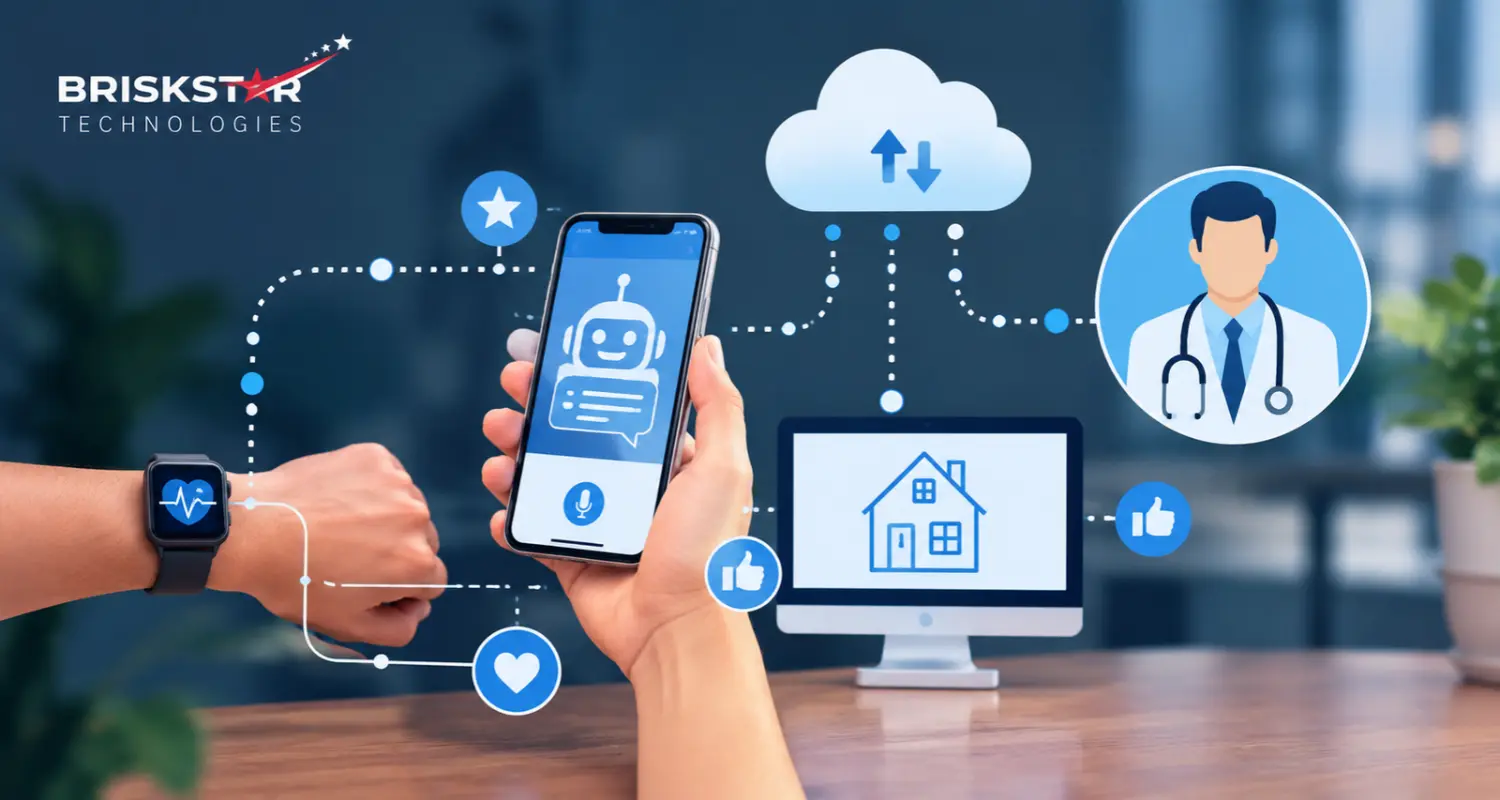
Build a Healthcare App That Makes Patient Care Easier and Your Business More Efficient
Managing a healthcare business involves more than treating patients. Your team also has to handle appointments, patient records, follow-ups, billing, reports, and everyday administrative tasks. When these processes rely on phone calls, paperwork, or disconnected software, even simple tasks can consume valuable time and create unnecessary friction for patients and staff.
A well-designed healthcare mobile application can bring these activities into one convenient digital experience. Patients can book appointments, access relevant health information, receive reminders, and connect with healthcare professionals. Meanwhile, your team can reduce repetitive administrative work, improve communication, and manage daily operations more efficiently.
However, every healthcare business has different requirements. A hospital may need appointment management and patient record access, while a diagnostic laboratory may want online test booking and report delivery. A healthcare startup might need a telemedicine platform that connects patients with doctors remotely.
At Briskstar, we help businesses turn these requirements into practical mobile application solutions. Our focus is on building healthcare apps around your workflows, your patients’ needs, and your long-term business goals not simply adding features that look impressive on paper.
Healthcare Mobile App Development Services for Your Business
Your application should solve a specific problem rather than force your team to change its entire working process. We develop healthcare mobile applications based on your business model, target audience, operational requirements, and integration needs.
Custom Healthcare App Development
Off-the-shelf software may not support every workflow your organization needs. Custom healthcare app development allows you to create an application around your existing processes, from patient registration to appointment management and ongoing care.
We work with you to define the essential features, select a suitable technology stack, and build an application that can evolve as your business grows.
Best suited for: Hospitals, clinics, healthcare startups, and medical service providers with specific operational requirements.
Telemedicine App Development
Patients may struggle to attend in-person consultations because of distance, busy schedules, or limited access to healthcare professionals. Telemedicine applications can make remote consultations more convenient.
We can develop solutions with video consultations, appointment scheduling, secure messaging, digital prescriptions where appropriate, and consultation history. These capabilities help healthcare providers offer remote services while giving patients a more accessible way to connect with their care team.
Patient Portal and Engagement Apps
Patients often need an easy way to access appointment details, instructions, test reports, and other relevant information. When they have to call your staff for every update, the workload increases.
A patient-facing application can provide secure access to supported health information, appointment reminders, follow-up notifications, and personalized communication. The result is a more organized patient experience and fewer avoidable administrative interactions.
Hospital and Clinic Management Apps
Managing multiple administrative activities across different systems can slow down daily operations. A hospital or clinic application can consolidate selected workflows into a single interface.
Depending on your requirements, we can develop features for appointment management, patient registration, staff coordination, billing workflows, and access to authorized patient information.
Diagnostic Lab and Pharmacy Apps
Diagnostic laboratories and pharmacies have different operational needs, but both can benefit from convenient digital services.
For diagnostic businesses, an app can support test booking, sample collection requests, report notifications, and secure report access. Pharmacy applications may include prescription submission, medicine ordering, order tracking, and refill reminders, subject to applicable regulations and business requirements.
Key Features of a Healthcare Mobile Application
The right features depend on the problem your business wants to solve. Instead of developing everything in the first release, we help prioritize capabilities that deliver practical value.
- Appointment booking and scheduling: Let patients view available slots, request appointments, reschedule visits, and receive reminders.
- Teleconsultation: Support remote consultations through appropriate video, audio, or messaging functionality.
- Electronic health record integration: Enable authorized access to relevant patient information by connecting with compatible healthcare systems.
- Diagnostic test booking and reports: Allow patients to request tests and access reports securely when they become available.
- Digital prescriptions: Support prescription-related workflows with appropriate professional authorization and regulatory safeguards.
- Notifications and follow-ups: Send appointment reminders, care instructions, and relevant updates with appropriate consent.
- Payments and billing: Integrate suitable payment gateways and billing workflows to simplify transactions.
- Admin dashboard: Give authorized staff tools to manage appointments, users, service information, and operational activities.
- Analytics and reporting: Help administrators understand appointment patterns, application usage, and workflow performance.
Every feature should have a clear purpose. For example, if appointment no-shows are a major concern, scheduling and reminder functionality may deserve priority over advanced analytics in the first release.
How a Healthcare App Can Benefit Your Business
Reduce Administrative Work
Manual appointment booking, repeated phone calls, and paperwork can take staff away from more important responsibilities. By digitizing suitable workflows, your team can spend less time handling repetitive tasks and more time supporting patients.
Improve the Patient Experience
Patients value clear information and convenient access to services. Features such as online booking, reminders, and secure access to reports can reduce unnecessary steps and make it easier to interact with your organization.
Support Better Patient Engagement
Communication should not end when a patient leaves the clinic. With consent-based reminders, follow-up notifications, and access to relevant instructions, your application can help patients stay connected with their healthcare providers.
Expand Access to Healthcare Services
Remote consultations and digital service requests can help you serve patients who cannot always visit your facility in person. Depending on your business model, this may also allow you to reach new patient groups or offer services beyond your immediate location.
Build a Scalable Digital Service
As your business grows, your application may need additional users, locations, integrations, and capabilities. A well-planned architecture can make future enhancements easier without requiring you to rebuild the entire product.
These benefits depend on implementation quality, staff adoption, integration reliability, and the actual needs of your patients. An app is most valuable when it improves a workflow that genuinely needs improvement.
Healthcare App Security, Privacy, and Integrations
Healthcare applications handle information that requires careful protection. Security should be considered from the planning stage rather than added as a final development task.
Our development approach can incorporate appropriate safeguards such as:
- Access controls: Restrict sensitive information to authorized users according to their roles.
- Data protection: Apply appropriate encryption for data transmission and storage.
- Secure authentication: Use suitable authentication methods and additional verification where needed.
- Audit trails: Record relevant access and system activities to support accountability.
- Privacy-conscious design: Collect only the information needed for defined purposes and handle consent appropriately.
- Testing and maintenance: Identify vulnerabilities, address defects, and keep supported components updated.
Healthcare apps may also need to connect with electronic health record systems, laboratory software, pharmacy platforms, billing tools, or third-party healthcare services. We assess available APIs, data formats, permissions, and integration limitations before selecting an approach.
Regulatory requirements depend on the markets you serve, the type of data you process, and your role in handling that data. For example, US healthcare projects may need to address applicable HIPAA obligations, while other markets have their own privacy and healthcare requirements. Compliance cannot be guaranteed by a particular feature or technology alone; it requires appropriate technical, organizational, and operational controls.
Our Healthcare Mobile App Development Process
A successful healthcare application starts with a clear plan. Our process is designed to reduce avoidable development risks and keep the project aligned with your business objectives.
1. Requirement Discovery
We discuss your target users, existing workflows, business challenges, essential integrations, and expected outcomes. This helps establish what the app needs to accomplish.
2. Scope and Feature Planning
We prioritize features for the initial release and identify what can be introduced later. This keeps the project focused on essential functionality instead of unnecessary complexity.
3. UI/UX Design
We create user journeys and interface designs that make common tasks straightforward. Healthcare applications should be easy to navigate for patients, caregivers, clinicians, and administrative staff.
4. Development and Integration
Our team builds the application and connects the required services, APIs, and backend systems based on the agreed scope.
5. Testing and Quality Assurance
We test functionality, usability, performance, supported devices, and relevant security controls. Healthcare-specific workflows and integration scenarios receive appropriate attention.
6. Deployment and Ongoing Support
After release preparation, we assist with deployment and can provide ongoing maintenance, updates, bug fixes, and enhancements according to the support arrangement.
How Much Does Healthcare Mobile App Development Cost?
The cost depends on the complexity of your application, the number of platforms, the features included, third-party integrations, security requirements, and ongoing maintenance needs.
For example, a basic appointment booking app generally requires less development effort than a telemedicine platform with video consultations, role-based access, electronic health record integrations, and administrative dashboards.
To estimate your project accurately, we first need to understand the essential workflows, integrations, and requirements for your intended launch. We can then define a realistic scope, identify major cost drivers, and discuss the most suitable development approach.
Why Choose Briskstar?
Choosing a healthcare app development partner means finding a team that understands both the technical requirements and the practical challenges of delivering a digital healthcare service.
We focus on understanding your business before recommending a solution, prioritizing features according to your goals, planning integrations carefully, and building an application that can be maintained as requirements change.
Whether you are launching a healthcare startup, modernizing an existing clinic workflow, or extending your healthcare services to mobile users, we can help you plan the next steps with a clear scope and development roadmap.
Let’s Build a Healthcare App Around Your Patients’ Needs
Your healthcare application should make services easier to access, help your team work more efficiently, and provide a dependable experience for the people who use it.
Start by identifying the biggest challenge you want to solve, whether that is appointment management, remote consultations, patient engagement, or disconnected systems. From there, we can help define the features, integrations, and development priorities that fit your business.
Ready to discuss your healthcare mobile application? Contact Briskstar to explore your requirements and plan your next step.
Tags :
Healthcare App
Healthcare Application